




Straight Vegetable Oil (SVO) vs. Biodiesel
While the benefits of burning biodiesel fuel are widely known and recognized, the effects of running straight vegetable oil (known as SVO) are often a matter of controversy and speculation. In an effort to clear up some of the confusion, the United States Department of Energy wrote an article in April of 2006 with the title, Straight Vegetable Oil as a Diesel Fuel?
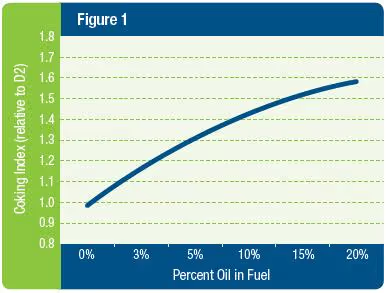
The idea of running SVO to power an engine is not new. In fact, Mr. Rudolf Diesel himself originally designed the diesel engine to be fueled by peanut oil. Modern diesel engines, however, are far different from the early prototypes. The advent of the injection pump, high pressure fuel systems, and various high tolerance parts require that a less viscous fuel be employed. In addition to this, straight vegetable oil is prone to polymerizing as well as coking under the extreme conditions found within a diesel engine. Figure 1 shows that even small percentages of oil mixed with standard diesel fuel can dramatically increase the coking index of the fuel blend.
- Diesel engines with vegetable oils offer acceptable engine performance and emissions for short-term operation. Long-term operation results in operational and durability problems. [SAE paper]
- Compared to No. 2 diesel fuel, all of the vegetable oils are much more viscous, are more reactive to oxygen, and have higher cloud point and pour temperatures. [U.S. Department of Energy article]
What if I Preheat the SVO Prior to Injection into the Engine?
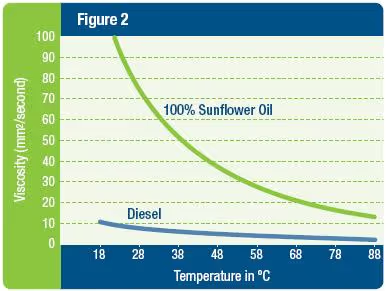
In an effort to reduce the viscosity of SVO, most users employ a preheating system. Such systems are able to reduce the viscosity of the fuel, but only to a certain extent. As Figure 2 above shows, vegetable oils retain much of their viscous nature even when preheated to high temperatures.
Also, note should be taken concerning the long-term effects of using SVO in a modern diesel engine with a catalytic converter or filter trap. In general, these systems were not originally designed with SVO in mind, they can be seriously damaged or poisoned by out-of-spec or contaminated fuel.
The Department of Energy summed up the situation well in the statement: "The published engineering literature strongly indicates that the use of SVO will lead to reduced engine life."
Consider the Legalities
While Springboard Biodiesel is not entirely opposed to the use of straight vegetable oil as a replacement for diesel, the operator should be aware that use of straight vegetable oil is entirely different from the use of ASTM-grade biodiesel. According to the EPA website:
Neat vegetable oils and recycled greases (also called waste cooking oil or yellow grease) that have not been processed into mono-alkyl esters are not biodiesel. These raw oils, used as fuel extenders or fuel substitutes, are not registered with EPA and are not legal to use as a motor vehicle fuel. Furthermore, cooking oil is physically and chemically different than diesel fuel and its use in conventional engines will generally cause negative effects on emissions and engine durability.
Because of the potential for increased emissions, it is considered unlawful tampering to convert a vehicle designed for diesel fuel to operate on waste oil without EPA certification. To date, EPA has not certified any conversions for waste oils. Even with EPA certification, conversions may violate the terms of the vehicle warranty. For more information on the certification process, please visit EPA's Web site.
The Department of Energy summed up the situation well in the statement: "The published engineering literature strongly indicates that the use of SVO will lead to reduced engine life."
Warranties
Most auto manufacturers only warranty very low blends of biodiesel in their vehicles (5-20% blends). This has caused some consumers to mistakenly assume that using biodiesel will void their vehicle’s warranty. This is not the case due to the Magnuson-Moss Warranty Act which was passed by Congress in 1975.
This act is applicable to burning biodiesel in that an auto maker cannot, by law, refuse to honor a warranty if their product has a problem not directly caused by burning biodiesel. If a person burns dirty biodiesel, and this directly causes a problem with their car, then the auto manufacturer may refuse to honor the warranty in this instance.
Similarly, if a person burns poor quality diesel fuel #2, directly from a fueling station pump, and it directly causes a problem with their vehicle, then the auto manufacturer may refuse to honor the warranty in this instance as well.
The Biodiesel Option - Convert the Oil Instead of the Engine
Biodiesel, on the other hand, is a product produced from a chemical reaction between SVO, methanol and a catalyst. Biodiesel has substantially different properties than SVO. This results in better engine performance. In most cases biodiesel has a lower boiling point and viscosity than does SVO. Biodiesel has a cetane rating substantially higher than petrol diesel and leaves minimal carbon deposits. More importantly, no modifications are needed for diesel engines to use biodiesel. The American Society for Testing and Materials (ASTM) has laid out specifications that should be met for running pure biodiesel (B100). ASTM D6751-03a is intended to ensure the quality of biodiesel used in the United States. Any biodiesel used, whether it be blended or B100, should meet this standard to ensure optimum longevity for an engine. For a complete list of ASTM biodiesel requirements, see the 2016 NREL Biodiesel Handling and Use Guidelines. Visit also Clean Fuels Alliance to learn more about biodiesel quality.
Biodiesel Quality and The BioPro™ Processors
The BioPro 190 and BioPro 380 produced by Springboard Biodiesel, LLC., are capable of making biodiesel in compliance with the ASTM D6751-03a standard. These processors are the ideal solution for any home or small business wanting to cut fuel costs, improve engine life, and benefit the environment.
Where Can I Get More Information?
- The Clean Cities activity has produced a fact sheet on biodiesel blends.
- The U.S. Department of Energy's Alternative Fuels Data Center is a vast collection of information on alternative fuels and alternative fuel vehicles.
- The U.S. Department of Energy's Office of Energy Efficiency and Renewable Energy website contains information on biodiesel and ethanol production and policy.
- Clean Fuels Alliance America is the national trade association representing the biodiesel industry. Its website serves as a clearinghouse of biodiesel related information.
- The National Renewable Energy Laboratory's Non-Petroleum Based Fuels website provides links to a variety of biofuels documents.
- The Environmental Protection Agency's Biodiesel Emissions Analysis Program website contains a biodiesel emissions database.
Frequently asked questions
What is the difference between straight vegetable oil and biodiesel?
Straight vegetable oil (SVO) is raw, unprocessed oil, while biodiesel is made by chemically reacting that oil with methanol and a catalyst. The reaction converts the oil into a fuel that is far less viscous, has a lower boiling point, a higher cetane rating, and leaves minimal carbon deposits.
Biodiesel meeting ASTM D6751 runs in diesel engines with no modifications. SVO generally requires a vehicle conversion, such as a preheating system, and still tends to cause long-term engine problems.
Can I run straight vegetable oil in a modern diesel engine?
It is not recommended. Vegetable oil can provide acceptable performance in the short term, but long-term use leads to operational and durability problems. Modern injection pumps and high-pressure fuel systems need a less viscous fuel, and SVO tends to polymerize and coke under engine conditions.
Even small amounts of oil mixed into diesel can sharply increase coking. Catalytic converters and filter traps can also be damaged by out-of-spec fuel. U.S. Department of Energy literature concludes SVO use will lead to reduced engine life.
Does preheating straight vegetable oil make it safe for diesel engines?
Preheating helps, but not enough. Most SVO users install a preheating system to reduce the oil's viscosity, and it does thin the oil to a degree. However, vegetable oils remain much more viscous than diesel fuel even when heated to high temperatures.
Preheating also does not address SVO's tendency to polymerize and form carbon deposits in the engine. Converting the oil into biodiesel removes the viscosity problem without modifying the engine.
Is it legal to use waste vegetable oil as fuel in a diesel vehicle in the US?
Generally not for on-road use. Under EPA rules, raw vegetable oils and recycled greases that have not been processed into biodiesel are not registered fuels and are not legal as motor vehicle fuel. Converting a diesel vehicle to run on waste oil without EPA certification is considered unlawful tampering, and EPA has historically not certified such conversions.
Conversions may also violate vehicle warranty terms. Properly made biodiesel is a registered, legal fuel.
Can I mix vegetable oil into diesel fuel instead of converting it to biodiesel?
It is not a good substitute for making biodiesel. Even small percentages of vegetable oil mixed into standard diesel can dramatically increase the coking tendency of the blend, meaning more carbon deposits in the injectors and combustion chamber. The oil is also more viscous and more reactive to oxygen than diesel fuel.
Under EPA rules, raw oils used as fuel extenders are not registered fuels and are not legal for motor vehicle use. Converting the oil to biodiesel first produces a fuel that blends with diesel in any ratio.



.svg)
