




Beef Tallow and Hydrogenated Oils in the BioPro
Some of our users have had questions regarding the use of highly saturated fats, hydrogenated oils, and tallows in the BioPro™ biodiesel processors. To make a long story short, they can be processed in a very similar manner to any other fat or oil, with a few minor differences.
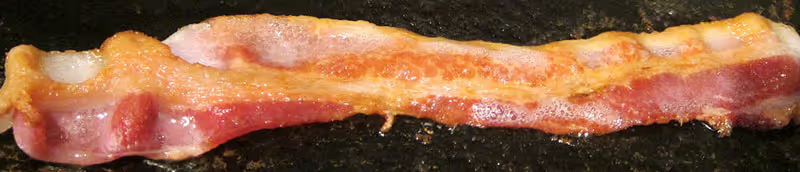
The most obvious difference between tallow and vegetable oil is the gel point of the feedstock. Because tallows are solid at room temperature, they can often be difficult to load into the machine. In the machine at our testing facility we have had to literally use a shovel to scoop solidified animal fats into the test machine for processing. A user may find it easier to use a heater to liquefy the animal fats in their storage vessel so that these may be pumped into the machine. This gel point difference may also affect the level of contaminants such as water and debris in the feedstock as well. As can be imagined, many contaminants that would have naturally settled to the bottom of a liquid feedstock will stay suspended in a feedstock that has solidified.
Therefore extra care must be taken to filter contaminants and remove water that could be in tallow based feedstock. The owner’s manual provides clear instructions on how to use the BioPro to effectively clean and dry your feedstock. Please note that as with oil from vegetable origin, we recommend that tallow processed in a BioPro have a FFA level of less than 5% and a water level of .2% or less.
The main stirring prop in the 190 is meant to stir liquids. If the main stirrer is turned on in the BioPro while it is filled with solidified feedstock, the excessive resistance is likely to blow the fuse to the stir motor. If the BioPro is filled this solidified feedstock we recommend turning on the manual heater switch until all of the feedstock is melted before turning on the manual main stir switch or starting the automatic process.
Note that fuel made from saturated feedstocks will tend to have a high gel point as well. Fuel made from beef tallow will often have a gel point of about 50 or 60 degrees F. This could be problematic if the user is attempting to utilize this fuel during cold weather or to purify it in a drywash column in cold weather. Springboard sells the SpringFlow 250 fuel preheater if you would like to be able to use this fuel in a greater temperature range. Finally, the user may find it beneficial to use warm water during the wash cycle of the machine when washing fuel made from tallow. This helps to ensure that the wash cycle runs smoothly, without any complications caused by cold water mixing with high gel point fuel.
Frequently asked questions
Can a BioPro make biodiesel from beef tallow, lard, or hydrogenated oil?
Yes. Tallow, lard, and hydrogenated oils can be processed in a BioPro in much the same way as vegetable oil, with a few differences. Because these fats are solid at room temperature, they must be fully melted before processing, since the BioPro processes only liquid feedstock.
They also need extra attention to filtering and drying, and the resulting fuel has a noticeably higher gel point, which matters for cold-weather washing and use.
How do I load solid tallow into a BioPro without blowing the stir motor fuse?
Melt the fat before the stirrer runs. The easiest approach is to heat the tallow in its storage vessel until it is liquid so it can be pumped into the machine. If solidified fat does end up in the BioPro, turn on the manual heater switch and wait until all of it has melted before turning on the manual main stir switch or starting the automatic process.
The main stirring propeller is designed for liquids; running it in solid fat creates enough resistance to blow the stir motor fuse.
Why does tallow feedstock need extra filtering and drying before processing?
When fat solidifies, water and debris that would normally settle to the bottom of a liquid oil stay suspended in it instead. As a result, tallow often carries more contaminants into the processor than liquid vegetable oil.
Filter and dry tallow carefully after melting it, using the BioPro cleaning and drying procedures in the owner's manual. The same limits apply as for vegetable oils: less than 5% free fatty acids and 0.2% water or less.
What is the gel point of biodiesel made from beef tallow?
Biodiesel made from beef tallow often gels at about 50 to 60 °F, much higher than fuel made from unsaturated vegetable oils. As a rule of thumb, biodiesel gels about 30 °F lower than the feedstock it was made from, so highly saturated fats produce high-gel-point fuel.
To use tallow biodiesel in cooler weather, consider a fuel preheater such as the SpringFlow 250, or blend it with petroleum diesel, which mixes with biodiesel in any ratio.
How should I wash and purify biodiesel made from tallow?
Use warm water for the BioPro wash cycle. Cold water mixing with high-gel-point tallow fuel can cause the fuel to partially gel and form emulsions, so warm water helps the wash run smoothly.
Be cautious purifying tallow fuel in a dry-wash column in cold conditions, since gelling can cause problems there as well. In winter, it is generally good practice to avoid high-gel-point feedstocks such as animal fats and hydrogenated oils altogether.



.svg)
